Thinking about living in one unit while your tenants help pay the mortgage? Multifamily investing in Louisville can be a smart, accessible way to start building wealth, especially if you plan to house-hack a duplex, triplex, or fourplex. You want clear numbers, financing options that fit first-time buyers, and a simple checklist that helps you avoid surprises. This guide gives you the rent and vacancy context, neighborhoods to consider, key underwriting steps, local rules to know, and a worked example so you can run your own numbers with confidence. Let’s dive in.
Why Louisville works for multifamily
Louisville’s rent levels support small multifamily investing without the price tags you see in many larger metros. Citywide apartment averages currently sit near the 1,000 to 1,400 per month band, with one provider reporting about 1,308 for the average apartment. You can use the city average from RentCafe’s Louisville rent trends as a quick underwriting anchor, then verify with local comps.
For conservative underwriting, the FY2026 HUD Fair Market Rents list a 1-bedroom at 1,047 and a 2-bedroom at 1,272 for the Louisville HMFA. These HUD FMRs are useful if you want a safety cushion or plan to evaluate assistance program eligibility.
Vacancy in the metro has hovered in the mid-single digits, with tighter pockets in some inner-ring areas. Local submarket reports show meaningful differences by neighborhood and property class. Review the latest submarket snapshot in the Commercial Kentucky multifamily report and pair that with on-the-ground comps for your target address.
Home prices and cap rates also support entry for first-time investors. The typical home value for the city sits roughly in the 250,000 to 260,000 range, which is where many beginner duplex opportunities live. Recent market commentary places average multifamily cap rates around the mid to high 6 percent range, with one forecast citing about 6.6 percent, though results vary by location and property condition. See the Louisville notes in this multifamily investment forecast and price against recent local sales.
Where to look in Louisville
Pricing and rents vary widely by block, so use neighborhood examples as a starting point, not a rule. Always validate rents and sale comps for a specific address.
Close-in urban 2–4 units
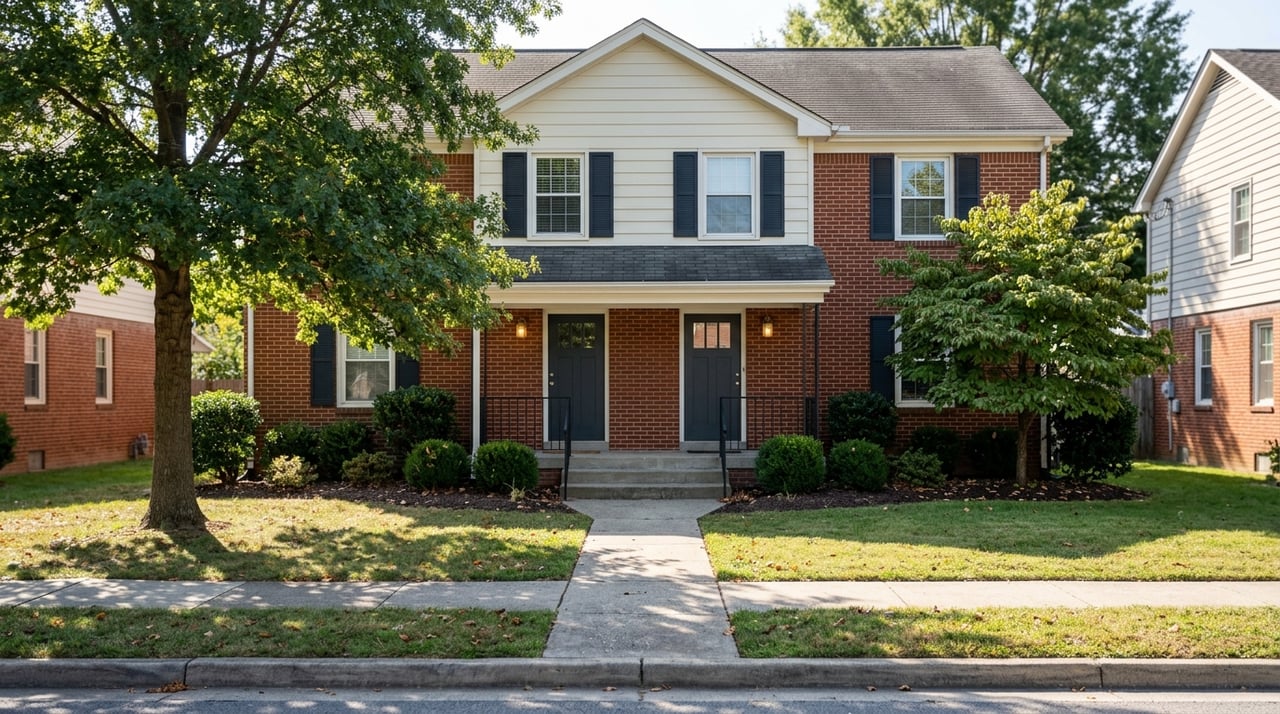
You will find many duplexes and triplexes in Old Louisville, Germantown, Shelby Park, Portland, and Crescent Hill. These areas include historic housing stock and diverse unit mixes. Blocks can perform very differently on rent and turnover, so ask for address-level comps before you write an offer.
Walkable hot spots
NuLu, Butchertown, and the Highlands often draw young professional renters and can command higher rents per unit. Purchase prices are usually higher too. If you are house-hacking, compare your all-in payment to achievable rents in the immediate area, not just the city average.
First-ring suburbs
St. Matthews, Jeffersontown, and Middletown are popular with renters who want larger units and easy access to services. Some pockets can show lower turnover. Expect tradeoffs between price, unit size, and yield.
Value plays and repositioning
Parts of West Louisville and select inner neighborhoods with older housing can offer higher cap rate potential. These deals often need stronger property management, thoughtful renovations, and a clear plan for compliance. Model repairs and lease-up time in your underwriting.
Underwriting basics you need
Before you tour, get fluent in a few core concepts that drive returns:
- Net Operating Income (NOI): Effective gross rent after vacancy minus operating expenses, before debt service. This is the property’s cash generation before financing.
- Capitalization Rate (Cap rate): NOI divided by purchase price, expressed as a percent. It helps you compare properties on an unlevered basis.
- Gross Rent Multiplier (GRM): Purchase price divided by annual gross rent. Lower GRM often indicates a faster payback on gross rents, all else equal.
- Cash-on-Cash Return: Annual pre-tax cash flow after mortgage payments divided by total cash invested. This matters most when you are using low-down-payment loans.
Set rents the right way
Use a blend of sources when you estimate income:
- City and neighborhood rent snapshots from RentCafe’s Louisville trends for a quick read.
- HUD Fair Market Rents as a conservative anchor and for program limits.
- Local MLS comps and current leases near your target address for the most accurate achieved-rent picture.
Vacancy, expenses, and reserves
Vacancy can vary by submarket and property type. Many investors model 5 to 10 percent for small multifamily, with a higher cushion for properties that need repositioning. Operating expenses commonly run 35 to 45 percent of effective gross income for 2–4 unit properties, but your actual number will depend on utilities, insurance, taxes, and maintenance. Compare your model to quotes and the seller’s expense history whenever possible.
Financing your first 2–4 unit
You have several common pathways. Program rules change, so confirm details with a local lender before you make an offer.
FHA for house-hackers
FHA’s 203(b) program insures one-to-four family owner-occupied mortgages and allows as little as 3.5 percent down, if you qualify. For 3–4 unit purchases, lenders review rental income and self-sufficiency tests, and the property must meet FHA standards. Read the FHA overview for Section 203(b) to understand general requirements.
VA for eligible veterans
Qualified veterans can often finance 1–4 unit owner-occupied properties with low or zero down, subject to entitlement and lender rules. This is a powerful tool for a duplex or fourplex house-hack. See a plain-language summary of VA multi-unit options.
Conventional and agency options
Some conventional programs permit lower down payments for owner-occupied 2-unit properties, though credit, reserves, and loan limits apply. Investment loans for non-occupant buyers typically require higher down payments and will be priced for risk. Review current conventional guidance and Fannie Mae references with your lender. A useful background primer is here: Fannie Mae program overview.
DSCR and portfolio loans
If you do not plan to occupy, debt-service coverage ratio (DSCR) products and local portfolio lenders are common. Expect larger down payments and underwriting based more on the property’s cash flow than your personal income.
Compliance and local rules
Owning rentals in Louisville comes with specific registration and safety steps. Build time and budget for these into your plan.
Lead-safe housing requirements
Louisville Metro is phasing in a Lead-Safe Housing Registry for properties built before 1978. Depending on build year, you may need a lead risk assessment, remediation, and follow-up steps. Get familiar with the phased deadlines and support resources in the city’s lead-safe registry update.
Rental registry and codes portal
Long-term rentals must be registered with Louisville Metro. The Department of Codes & Regulations offers an online portal to complete registrations, manage payments, and access forms. Check the latest process and fee details on the city’s rental registry software announcement.
Landlord–tenant framework
Louisville and Jefferson County operate under Kentucky’s landlord–tenant laws and local ordinances. Notice periods, deposits, and eviction procedures follow statute and local rules. For context and references, review the University of Louisville’s State of Metropolitan Housing report and consult qualified legal resources for specific questions.
Utilities and certifications
Confirm whether units are separately metered or if you can allocate utilities, since this affects expenses and tenant billing. Ask about any required certificates, prior permits, and open code violations.
Due-diligence checklist
Use this quick checklist to structure your offer and inspection period.
Property and operations
- Verify unit count, bed/bath, separate kitchens, and entrances.
- Review a current rent roll, signed leases, and bank deposits. Ask for Schedule E tax history if available.
- Check market rents and appraiser comps, especially if using FHA or VA financing.
- Inspect roof, HVAC, electrical, plumbing, foundation, and windows. Note age and expected life.
- Confirm parking, zoning, permits, and occupancy history.
- For pre-1978 buildings, plan for lead testing and any registry steps tied to the city’s lead-safe program.
Financial and legal
- Pull Jefferson County tax history and assessments. Start with the PVA mapping resources here: Jefferson County PVA map reference.
- Gather actual expense statements for insurance, utilities, management, repairs, and reserves. Model a vacancy cushion of 5 to 10 percent based on property stability.
- Confirm your loan program early, including FHA self-sufficiency checks for 3–4 units, VA entitlement math, and conventional down payment and PMI rules.
- Order title work and check for encumbrances, easements, and rental licensing compliance.
Local partners to engage
- A Louisville agent who can run address-level comps and rent checks.
- An appraiser familiar with small multifamily income forms.
- An FHA/VA-savvy lender who regularly closes 2–4 unit loans in Jefferson County.
- A property manager or contractor for quick repair estimates and rent-readiness planning.
Example: duplex house-hack math
Use this simple example to see how small changes in price, rent, or interest rate can change outcomes. These figures are illustrative only.
Assumptions:
- Purchase price: 260,000 (near the city’s typical home value range).
- Rents: two 1-bedroom units at 1,165 each. This uses a citywide average as a proxy from RentCafe’s Louisville data.
- Vacancy allowance: 8 percent. Operating expenses: assume 40 percent of effective gross income. Your actual numbers will vary.
Quick math (annual):
- Gross rent: 1,165 × 2 × 12 = 27,960
- Less 8 percent vacancy: Effective gross = 25,723
- Less 40 percent operating expenses: NOI ≈ 15,434
- Cap rate: 15,434 ÷ 260,000 ≈ 5.9 percent
Levered view (illustrative financing):
- FHA scenario with 3.5 percent down: cash down ≈ 9,100 plus closing costs and reserves. Loan ≈ 250,900. If the rate were near 6 percent on a 30-year term, principal and interest would be about 1,500 per month.
- Annual debt service ≈ 18,000. Pre-tax cash flow ≈ 15,434 − 18,000 ≈ −2,566 per year.
This example shows why house-hackers often focus on higher in-place or post-renovation rents, sharper purchase prices, or rate and term improvements. Always underwrite with address-level comps and your lender’s current quotes.
How a local agent helps your ROI
A skilled local agent can tilt the odds in your favor, especially on your first 2–4 unit purchase.
- Source inventory and comps: Find viable duplex and triplex options, pocket leads, and off-market opportunities. Validate achievable rents block by block.
- Underwrite fast and accurately: Pressure test expenses, taxes, and insurance with real quotes. Get quick repair bids that help you negotiate credits.
- Navigate local rules: Confirm rental registration, lead-safe steps, and any open code cases upfront using the city’s rental registry portal resources.
- Build your team: Introduce appraisers, FHA/VA lenders, property managers, and reliable contractors who work 2–4 unit properties in Jefferson County.
Ready to explore Louisville duplexes, run the numbers, and write a strong offer? Reach out to Sam Stone for data-driven guidance, on-the-ground comps, and a clear plan from search to close.
FAQs
What are typical Louisville rents for beginners to use?
- City averages are roughly 1,000 to 1,400 per month across unit types, with one provider around 1,308. For conservative estimates, HUD lists FY2026 FMRs at 1,047 for a 1-bedroom and 1,272 for a 2-bedroom.
How does Louisville’s rental registry affect my purchase plan?
- Long-term rentals must be registered with the city, and pre-1978 buildings are being phased into a lead-safe registry. Plan time and budget for inspections, potential remediation, and registration steps.
Can I buy a fourplex in Louisville with FHA or VA?
- Yes, both FHA 203(b) and VA can finance 1–4 unit owner-occupied properties if you qualify. FHA has self-sufficiency tests for 3–4 units, and VA financing depends on entitlement and lender rules.
What is a good cap rate for small multifamily in Louisville?
- Recent reports cite average multifamily cap rates around the mid to high 6 percent range for the metro, but results vary by neighborhood and property condition. Use address-level comps and current income to price your deal.
Which neighborhoods should a first-time house-hacker consider?
- Start with close-in areas rich in 2–4 unit stock, such as Old Louisville, Germantown, Shelby Park, Portland, and Crescent Hill. Also evaluate NuLu, Butchertown, and the Highlands for higher-rent potential, and first-ring suburbs like St. Matthews and Jeffersontown for larger units.
How much should I budget for vacancy and repairs in Louisville?
- Many investors model 5 to 10 percent vacancy and 35 to 45 percent operating expenses for small multifamily. Adjust based on unit condition, utility setup, and your plan for renovations or repositioning.