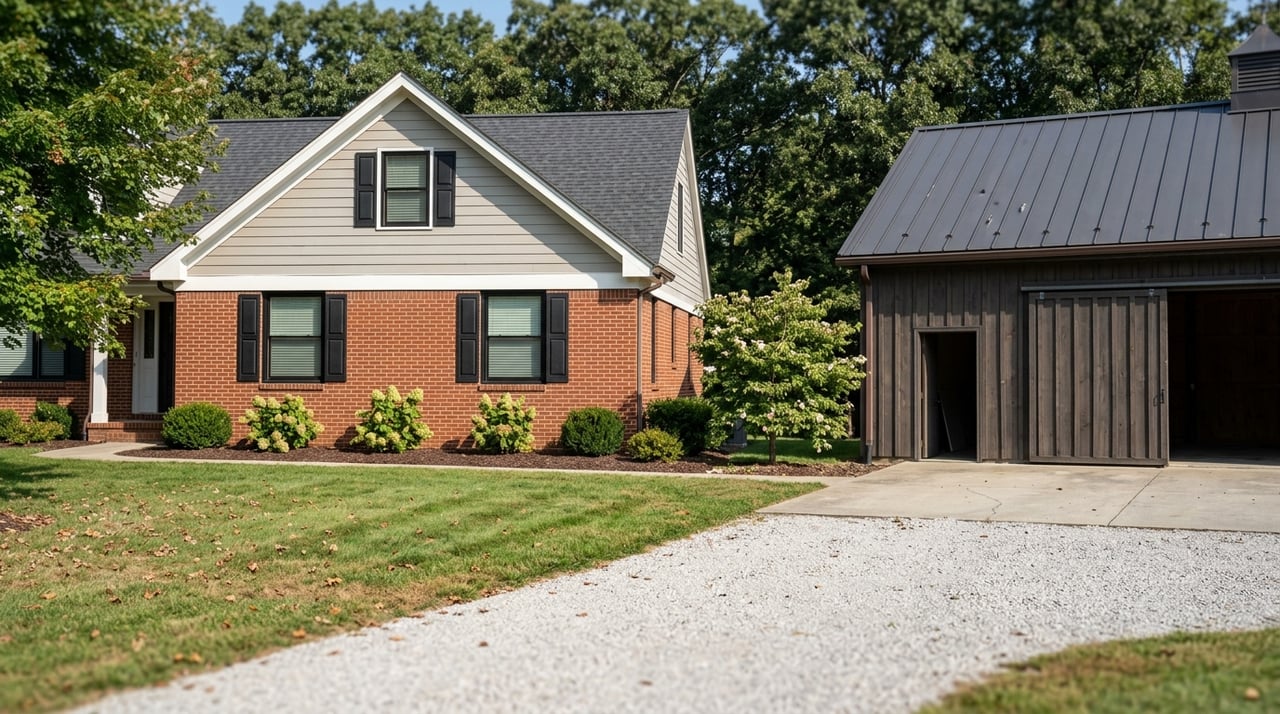
If you are getting ready to sell acreage or an estate in Simpsonville, you are not just listing a house. You are presenting a property with land, use potential, and a lifestyle story that buyers will study closely. When your home includes pastures, barns, fencing, or outbuildings, preparation matters even more. This guide will help you focus on the updates, records, and marketing details that can make your property easier to understand and more appealing to serious buyers. Let’s dive in.
Why Simpsonville acreage stands out
Simpsonville has a distinct identity that can shape how buyers view your property. The City of Simpsonville highlights its location just minutes from Louisville and its setting among prominent American Saddlebred horse farms. Shelby County also describes the area as sitting between Louisville and Lexington and being known as the Saddlebred Capital of the World.
That local context matters when you prepare for market. Buyers may be drawn to rural privacy, access to nearby metro areas, and land features that support horse or hobby-farm use. In Simpsonville, acreage is often about more than square footage inside the home.
Countywide housing data also helps frame the market. According to U.S. Census QuickFacts for Shelby County, the owner-occupied housing rate is 73.9 percent, the median owner-occupied home value is $304,800, and the median household income is $82,604. While those figures are countywide, they help show that you are marketing into a largely owner-occupied area where buyers may value long-term property utility.
Lead with land use
When you sell an acreage property, buyers want to know how the land works. They are often looking past the front door and asking practical questions about layout, access, fencing, and structures. That is especially true in Shelby County, where agricultural and horse-related uses are part of the area’s identity.
The county’s agricultural district ordinance allows uses connected to farm operations, including agricultural structures, stables, horse training tracks, horse boarding, and riding classes, with a listed minimum lot area of 5 acres for that district. You can review that in the Shelby County agricultural district ordinance. If your property supports those kinds of uses, that can be an important part of its story, but only if the land use, improvements, and zoning back it up.
Before listing, take time to identify what makes your property functional, not just attractive. Buyers will notice details that show the land is usable and maintained.
Features buyers want clarified
- Total acreage and how the land is laid out
- Fenced or cross-fenced areas
- Barns, stalls, sheds, and other outbuildings
- Water access and practical access points
- Paddocks, arenas, or training spaces
- Driveway condition and trailer access
- Zoning or land-use status
Prep the property like a rural asset
Acreage buyers often assess risk the moment they pull in. If fence lines look overgrown, outbuildings appear neglected, or equipment and debris are scattered around, buyers may assume bigger maintenance issues are hiding elsewhere. First impressions count on larger properties because buyers know more land usually means more upkeep.
The Shelby County Code Enforcement Board oversees compliance related to public health, safety, building standards, and zoning laws. While every property is different, visible clutter, nuisance conditions, or deferred maintenance can affect how confidently a buyer approaches your listing.
Start with the basics and make the property read as cared for. Clean, open, and well-defined spaces help buyers understand what they are buying.
Smart pre-listing cleanup steps
- Mow and trim along driveways, fence lines, and paths
- Remove unused materials, old equipment, and general clutter
- Clear barn aisles and organize storage areas
- Wash doors, windows, and exterior surfaces where needed
- Freshen gravel drives or high-traffic approach areas
- Cut back brush that blocks views of fields or structures
Focus on barns and outbuildings
On an estate or acreage property, barns and accessory structures can influence both marketability and perceived value. Buyers will often inspect these spaces closely because they may affect future use, maintenance costs, and overall confidence in the property. A neglected barn can distract from an otherwise strong home.
That concern is supported by local valuation practices. The Shelby County PVA notes that property is assessed at 100 percent fair cash value, while farm land may be assessed at agricultural value instead of market value. The Kentucky Department of Revenue also explains that barn value and other improvements are typically considered through a cost approach, with depreciation affected by age and maintenance.
In plain terms, condition matters. If your barns, sheds, or similar structures are in better shape, that can help from both a presentation and valuation standpoint.
Barn updates worth making
- Repair loose boards, latches, and door hardware
- Replace burned-out bulbs and improve lighting
- Address roof leaks or visible water intrusion
- Remove cobwebs, dust, and excess stored items
- Check for pest issues before showings
- Make stalls and work areas easy to walk through
Verify permits before you market
One of the fastest ways to slow down a sale is uncertainty about what was built, altered, or added over time. Buyers of acreage properties often ask detailed questions about barns, sheds, garages, retaining walls, and other improvements. If you can answer those questions early, you can reduce friction later.
According to the Shelby County Building Inspector permit requirements, permits are generally required to construct, enlarge, alter, repair, or change a structure. The county also lists barns, garages, tool sheds, storage sheds, and retaining walls as accessory structures in its building materials.
There is also an important detail sellers should not ignore. County materials contain different published thresholds for small detached accessory structures that may be permit-exempt. One page says 120 square feet or less, while the fee schedule states 200 square feet and less. Because those public materials do not fully match, it is smart to verify any shed, barn, or similar structure with the Building Inspector before you market it as permit-exempt.
Confirm zoning and jurisdiction
Acreage buyers are often less interested in vague descriptions and more interested in documented facts. If you plan to describe a property as horse-ready, farm-ready, or suited for a specific use, those claims should be supported by the property’s features and applicable rules. That includes zoning, permits, and jurisdiction.
The Shelby County Planning and Zoning Department handles zone changes, subdivision and development plan review, zoning permits for structures and signage, conditional uses, waivers, and E911 addressing. Because Simpsonville is a separate city within Shelby County, confirming whether the parcel falls under city or county oversight is a worthwhile step before listing.
Having clear records ready can make your listing stronger. It also helps buyers feel that they are getting a well-managed property with fewer unknowns.
Documents to gather early
- Recent survey, if available
- Zoning information
- Permit records for barns or additions
- Utility and water details
- Tax records and parcel identifiers
- Any available layout notes for paddocks, fencing, or arenas
Review taxes and agricultural valuation
Taxes are another area where preparation can help avoid confusion. Kentucky property records and agricultural classifications can affect how buyers understand ongoing ownership costs. For acreage properties, that can be an especially important part of the conversation.
The Kentucky Department of Revenue says farm land may be assessed at agricultural value rather than market value. Shelby County also notes through the PVA that tax bills remain in the name of the person who owned the property on January 1 of the tax year.
Before listing, review whether the land is classified correctly and whether improvements appear accurately in the assessment record. This can help you and your agent explain the property more clearly and avoid last-minute surprises around closing and prorations.
Use photography that explains the property
Standard listing photos are rarely enough for acreage. Buyers need help seeing how the land is organized and how the improvements connect to it. If you only show the front elevation and a few interior rooms, you may miss the features that actually drive interest.
In Simpsonville, visual marketing should reflect what makes these properties unique. Since local sources emphasize horse-country character and equestrian amenities such as Shelby Trails Park, it makes sense to present the property in a way that highlights use, layout, and setting.
Photos that matter most
- Aerial views showing the full property layout
- Pasture and fence line photos
- Barn interiors and stall counts
- Paddocks, arenas, or training areas
- Water features or access points
- Driveway approach and trailer maneuverability
- Main home images that connect the residence to the land
Price and present with precision
Acreage and estate homes usually attract a narrower buyer pool than a typical subdivision listing. That makes presentation and exposure even more important. Buyers searching for Simpsonville acreage may be looking for horse property, hobby-farm potential, privacy, or estate-style living with access to Louisville and Lexington.
To reach those buyers, your listing needs more than basic marketing. It should explain the property clearly, answer likely questions upfront, and use strong visuals to show why the property stands out. For a unique listing, broad digital exposure and polished presentation can make a real difference in attracting qualified interest.
Work from a seller checklist
If you want to simplify your pre-listing process, focus on the items that create clarity and confidence for buyers.
Simpsonville acreage seller checklist
- Clean and declutter the full property, not just the house
- Repair visible issues in barns and outbuildings
- Verify permits for sheds, barns, and accessory structures
- Confirm zoning and property jurisdiction
- Review tax records and agricultural valuation status
- Gather surveys, parcel details, and supporting documents
- Plan photography that shows layout, land use, and improvements
- Prepare accurate descriptions for horse or farm features
Selling acreage in Simpsonville is often about turning complexity into clarity. When your land, structures, and records are well prepared, buyers can focus on the opportunity instead of the unknowns.
If you are thinking about listing your Simpsonville acreage or estate, Sam Stone can help you position the property with polished marketing, clear strategy, and local insight designed to attract serious buyers.
FAQs
What should you fix before listing a Simpsonville acreage property?
- Focus first on visible maintenance issues, especially along driveways, fence lines, barns, sheds, and other outbuildings. Clean, organized, and functional improvements can help buyers feel more confident about the property.
Can you market a Simpsonville property as horse-ready?
- You should only describe a property as horse-ready if its land features, access, water, fencing, and applicable zoning support that use. Shelby County’s agricultural district recognizes horse-related uses, but your specific property details still matter.
Do barns and sheds in Shelby County always need permits?
- Not always, but county materials show different size thresholds for some small detached accessory structures. It is wise to verify permit status with the Building Inspector before listing.
Why do zoning records matter for Simpsonville estate sales?
- Buyers often want clear answers about how land and structures can be used. Confirmed zoning and jurisdiction details can reduce uncertainty and support more accurate marketing.
Should you mention agricultural valuation when selling Shelby County land?
- Yes, if it applies to your property. Kentucky says farm land may be assessed at agricultural value rather than market value, so that can be useful context for buyers reviewing ownership costs.